What makes a traditional tattoo font for bold lettering work?
A traditional tattoo font for bold lettering delivers high-impact readability at small sizes and holds up under skin distortion. It’s not just about thickness it’s about consistent stroke weight, tight kerning, and strong serifs that anchor each character. These fonts were built for visibility on arms, chests, and hands, where clarity matters more than elegance.
When should you choose this style?
Use a traditional tattoo font for bold lettering when the text is the focal point: names, mottos, ship names, or short phrases meant to last decades. It suits black-and-grey or classic red-and-black color schemes. Avoid it for long passages or delicate script-based designs its strength lies in authority, not subtlety. Fonts like those found in the old-school tattoo font with thick serifs excel here.
How does your design context affect the choice?
Thicker lettering works best on smooth, taut skin forearms, upper chest, or calves. On looser or textured areas (like the inner thigh or lower back), slightly wider spacing prevents ink bleed from softening edges. If the tattoo will be exposed to sun or frequent friction, stick to bolder outlines they resist fading better than fine lines. For formal events or professional visibility, a clean, upright version like the vintage American traditional tattoo font reads clearly without looking aggressive.
Common mistakes and how to fix them
Too much spacing between letters makes bold fonts look disconnected. Too little, and characters merge into blobs. Always test your layout at 100% scale on skin-toned paper before finalizing. Avoid stretching or skewing the font traditional tattoo fonts rely on balanced proportions. If your design feels “heavy” or hard to read, reduce the number of words instead of thinning strokes. A classic Sailor Jerry-style tattoo font shows how rhythm and weight interact naturally.
Your next steps: a quick checklist
- Confirm your phrase fits within the intended space aim for no more than 5–7 words for maximum impact
- Choose a font with uniform stroke weight and clear serifs avoid decorative variants with uneven thicks/thins
- Ask your artist to sketch the layout at actual size on your skin, not just on paper
- Review the design in natural light if any letter looks “off,” adjust spacing before needle hits skin
- Plan aftercare around bold ink: keep it moisturized but not greasy, and avoid direct sun for 4–6 weeks
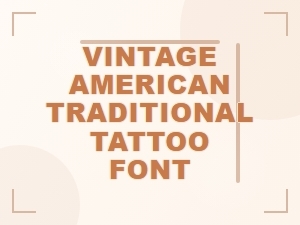 Vintage American Traditional Tattoo Font
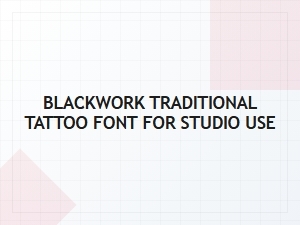 Blackwork Traditional Tattoo Font for Studio Use
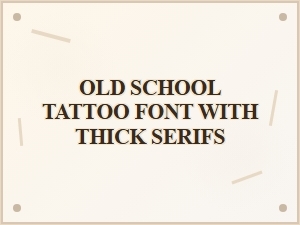 Bold Serif Old School Tattoo Font
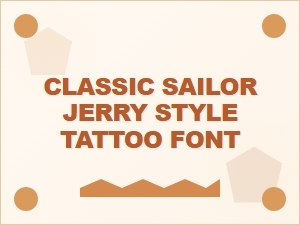 Classic Sailor Jerry Style Tattoo Font
 Modern Script Fonts for Tattoo Studio Signage
 Best Bold Display Fonts for Tattoo Studio Branding